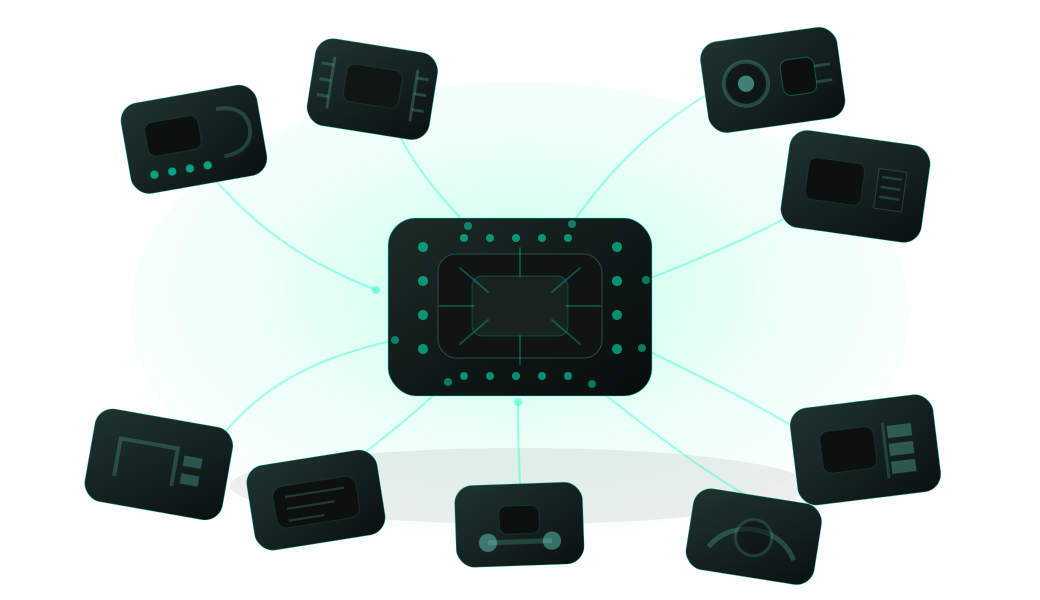
dock · adapters · expander

Build a better bench around Bit Pirate.

Explore the ESP32 Bit Pirate hardware lineup: Dock board, plug-in adapters for common modules such as CC1101, NRF24, CAN and serial interfaces, selectable target-side logic levels from 1.8V to 5V, and optional radio coprocessors such as ESP32-C5 for extended 5 GHz Wi-Fi experiments. Use this page for the physical hardware layer, then jump to Boards for ESP32-S3 targets or Modules for concrete chips and peripherals.

ESP32-C5 Bus Expander

radio coprocessor

Keep Bit Pirate on the ESP32-S3, add a second chip for radio work.

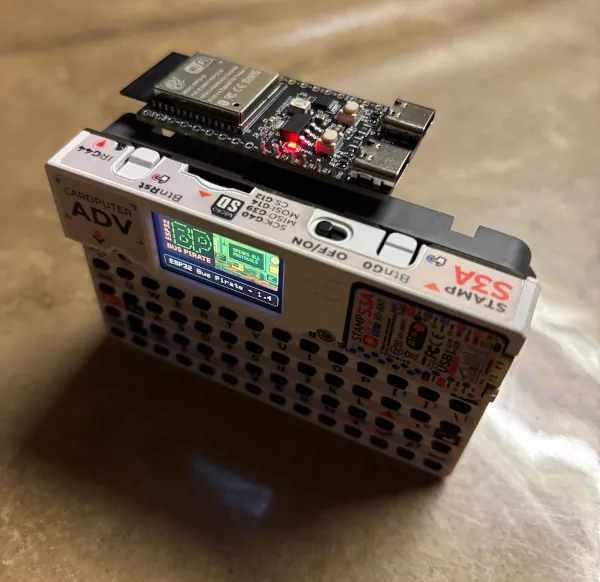
The ESP32-C5 Bus Expander is the companion firmware for a small ESP32-C5 board connected to the main ESP32 Bit Pirate device. The goal is not to replace the primary board: the S3 still stays the user interface, CLI endpoint, scripting target and web-tool bridge.

The C5 side handles radio features that are not available on the usual ESP32-S3 targets, starting with 5 GHz Wi-Fi experiments. The architecture also leaves room for later IEEE 802.15.4 work such as Zigbee, Thread or Matter-oriented protocol exploration.

M5Stack Cardputer with an ESP32-C5 bus expander attached.

Bit Pirate Hardware

dock · adapters

A hardware repo for the dock carrier board and module adapters.

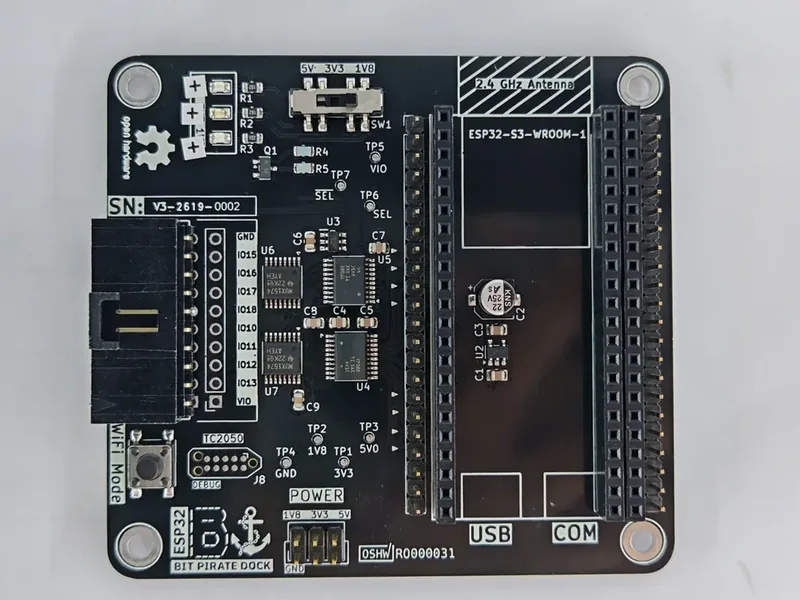
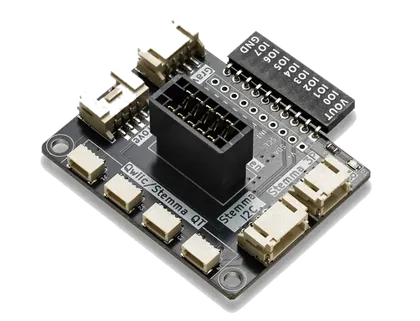
Bit Pirate Hardware is the shared open-hardware home for the Dock carrier board and module adapters. Drop in an ESP32-S3 DevKit, flash the Bit Pirate firmware, then use the carrier board and adapters to expose a practical bench interface instead of wiring every target or module directly to raw ESP32 GPIO.

The important part is the physical layer: the ESP32-S3 is a 3.3 V device, while real boards often expose 1.8 V flash, 3.3 V sensors or 5 V logic. The Dock board adds selectable target-side translation at 1.8 V, 3.3 V and 5 V so the tool can match the device under test before signals leave the board.

What Bit Pirate Hardware adds

  • ESP32-S3-DevKitC-1 style carrier footprint for the reference S3 build and compatible clones with matching headers.
  • Selectable 1.8 V, 3.3 V or 5 V target-side operation for external peripherals.
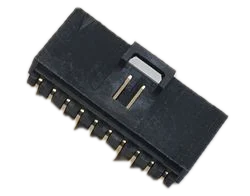
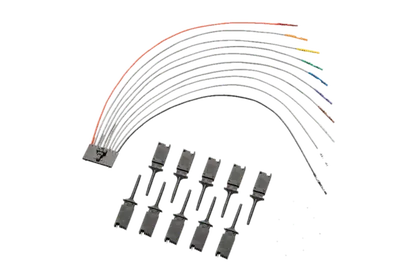
  • A Bus Pirate-style 10-pin connector so original probe cables, clips and adapter boards can plug into the workflow.
  • Open hardware files: KiCad sources, gerbers, schematic PDF, BOM, 3D models and enclosure assets.
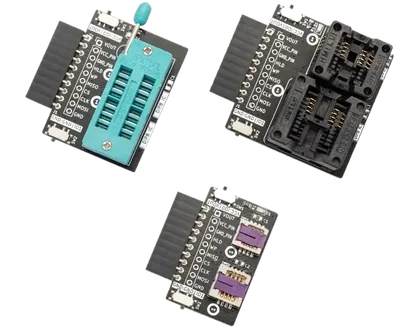
  • Supported module adapters for CC1101, NRF24, CAN and other bench modules.

PCBWay logo.

Thanks to PCBWay for helping with the Dock PCB prototype and creation.

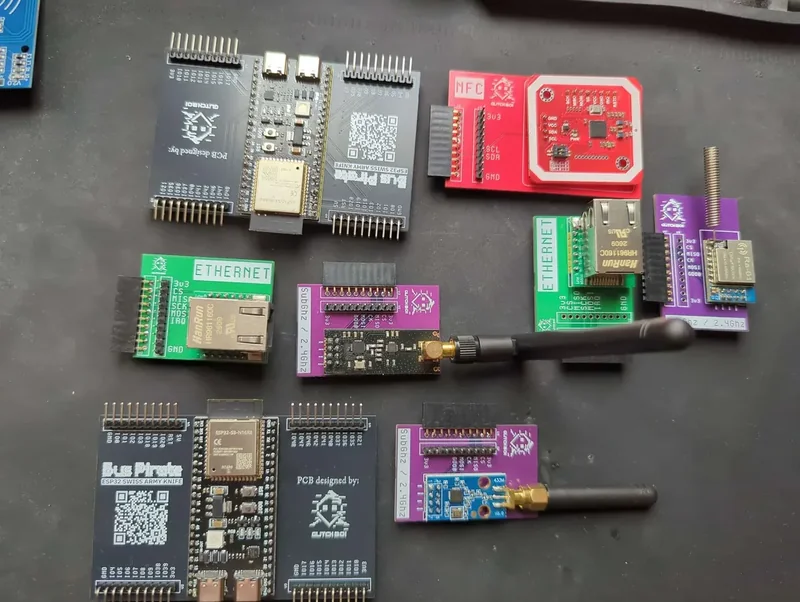
Assembled Bit Pirate Hardware Dock PCB with 10-pin adapter connector. Dock PCB with plug-in adapter boards for Ethernet, NFC and radio modules.

Original Bus Pirate adapters through the 10-pin connector

Bit Pirate Hardware keeps the adapter story visible: the 10-pin connector is there so existing Bus Pirate probe cables and adapter planks can be reused instead of recreating every accessory from scratch. The original Bus Pirate adapter ecosystem is documented at buspirate.com.

Modules and target chips

concrete bench targets

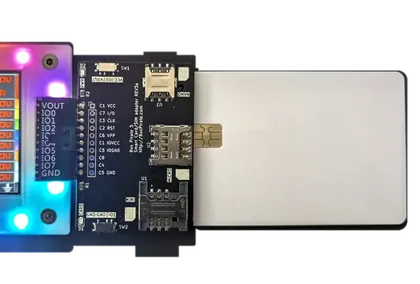
Explore modules, target chips, flash, EEPROM, smartcards and more.

Use the dedicated module hub for CC1101, MCP2515, nRF24L01, W5500, SPI NOR flash, EEPROM, smartcards, sensors and other concrete targets. This hardware page stays focused on Dock, adapters, level translation and the physical bench layer.

Explore modules
Cluster of radio modules, memory chips, smartcards and adapter boards.

Hardware notes

Start simple, then expand.

An ESP32-S3 DevKit is a flexible base you can extend with modules, adapters and wiring. Choose Cardputer, T-Embed or other supported boards when you want a screen, keyboard, battery, enclosure or radio module already integrated.

Voltage still matters.

The ESP32 side is not a magic universal input. Use the Dock board translation path when you need 1.8 V, 3.3 V or 5 V target-side operation, and always verify the selected voltage before wiring external hardware.