Web Serial tools for ESP32, STM32, AVR, flashing and hardware testing
Free browser-based Web Serial tools for ESP32 flashing, serial terminals, SPI flash programming,
logic analysis, STM32 and AVR programming, and GPIO/I2C/SPI testing. Connect compatible hardware directly
from your browser to inspect, program and test embedded devices without
installing a desktop toolchain.
>_ Web Serial
Web Serial Terminal for USB UART Devices
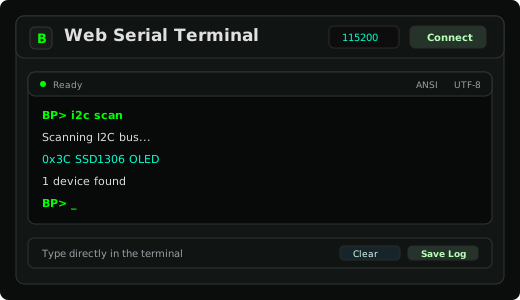
Connect to ESP32, Arduino, ARM boards, Bus Pirate firmware, USB-UART adapters and CDC-ACM serial devices directly from Chrome, Firefox or Edge. Read logs, send commands, paste scripts, save serial sessions locally.
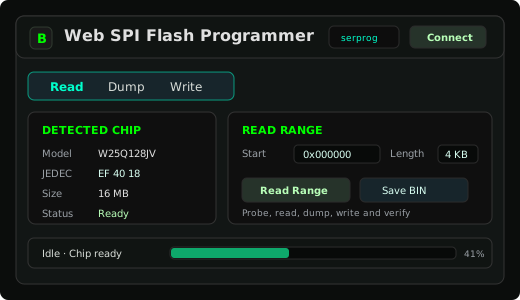
Browser-based flashrom workflow for probing, reading, writing, and saving SPI NOR flash chips through serprog-compatible hardware, enabling firmware extraction directly from a web browser.
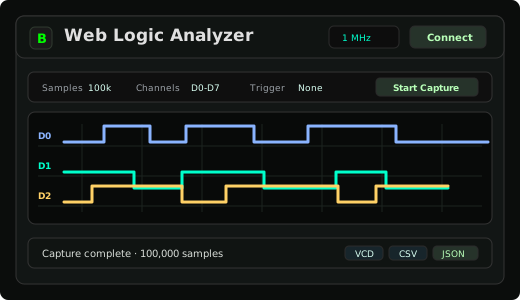
Capture digital signals from SUMP-compatible hardware, inspect GPIO waveforms in the browser and export VCD, CSV, raw binary or session JSON data for protocol debugging and reproducible analysis.
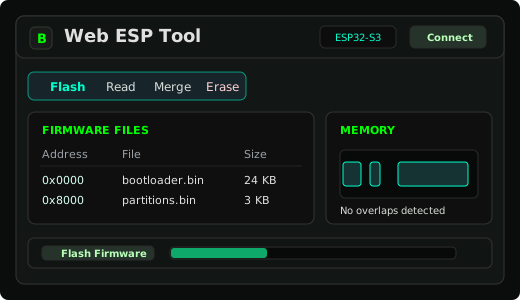
Flash ESP firmware parts, read backups, merge binaries offline and erase chips from a desktop-style browser tool. Supports common ESP32 layouts, custom offsets, validation, all in your web browser.
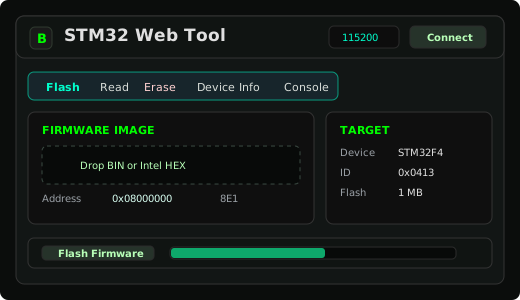
Identify STM32 targets, flash BIN or Intel HEX firmware, back up memory, erase pages or sectors and switch to a serial console through the built-in ROM UART bootloader or ST-Link adapter.
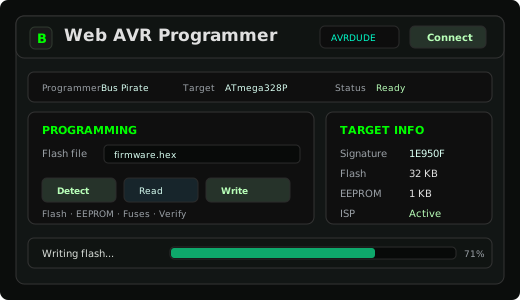
Prototype AVR ISP workflows in the browser with the ESP32 Bit Pirate AVRDUDE adapter. Detect ATmega and ATtiny targets, read memory, write HEX files with the Bus Pirate driver.
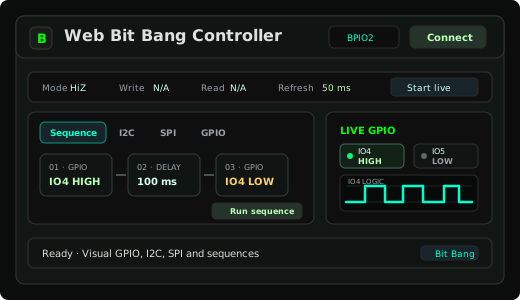
Use compatible BPIO2 hardware to control GPIOs, scan and transact with I2C devices, exchange SPI data and build simple visual hardware sequences directly in the browser.
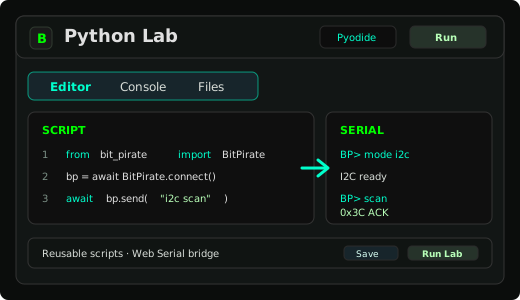
Run Python in the browser with Pyodide, load ESP32-Bit-Pirate-Scripts from GitHub and control ESP32 Bit Pirate over Web Serial for CLI and BPIO2 workflows.
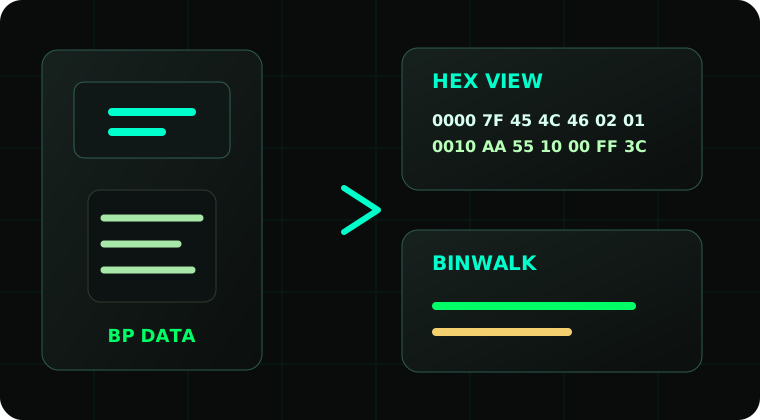
Use these browser tools after captures, serial logs or firmware reads to inspect bytes, extract ranges, parse structures and study small executable payloads.
Compatibility and Usage Tips
Works with ESP32 Bit Pirate and compatible protocol devices
These browser tools are built for ESP32 Bit Pirate workflows, but they also work with other hardware that exposes the same open interfaces and protocol adapters.
Web Serial works in Chrome, Firefox, Edge, Opera and compatible Chromium browsers on desktop. Safari does not currently support Web Serial hardware access.
Supported Hardware
The operating system must recognize your ESP32 board, USB UART adapter, CDC-ACM device or ESP32 Bit Pirate USB mode before the browser can request access.
Linux Serial Access
If serial access fails on Linux, grant your user access to the device with sudo setfacl -m u:$USER:rw /dev/ttyACM0, then reconnect the board.
Local Privacy
Serial logs, flash data and logic analyzer captures are processed locally by these static pages. The application does not upload captures to a server.
Open-source hardware debugging in the browser
ESP32 Bit Pirate is an open-source firmware that turns compatible ESP32-S3 devices into a multi-protocol hardware hacking and debugging tool inspired by the Bus Pirate.
It supports serial and web command-line workflows for UART, I2C, SPI, 1-Wire, 2-Wire, 3-Wire, CAN, JTAG/SWD, infrared, Wi-Fi, Bluetooth, Sub-GHz, RFID, RF24, FM and USB adapter modes.
These web tools strengthen the ESP32 Bit Pirate ecosystem by making common embedded workflows discoverable from a secure browser page: serial console access, firmware memory work, digital logic capture and protocol investigation.
The same hardware can switch between protocol mode and adapter-style workflows, so you can move from probing a bus to capturing waveforms, reading memory or programming without changing tools.
Serial and Web CLI
Use the same command structure over USB serial, Wi-Fi web interface or browser-based Web Serial workflows.
Protocol Workbench
Scan, sniff, send, script, dump, explore wired and wireless protocols.
Firmware and Memory
Work with EEPROM, flash, smartcard, SIM, iButton, RFID tag, firmware dumps.