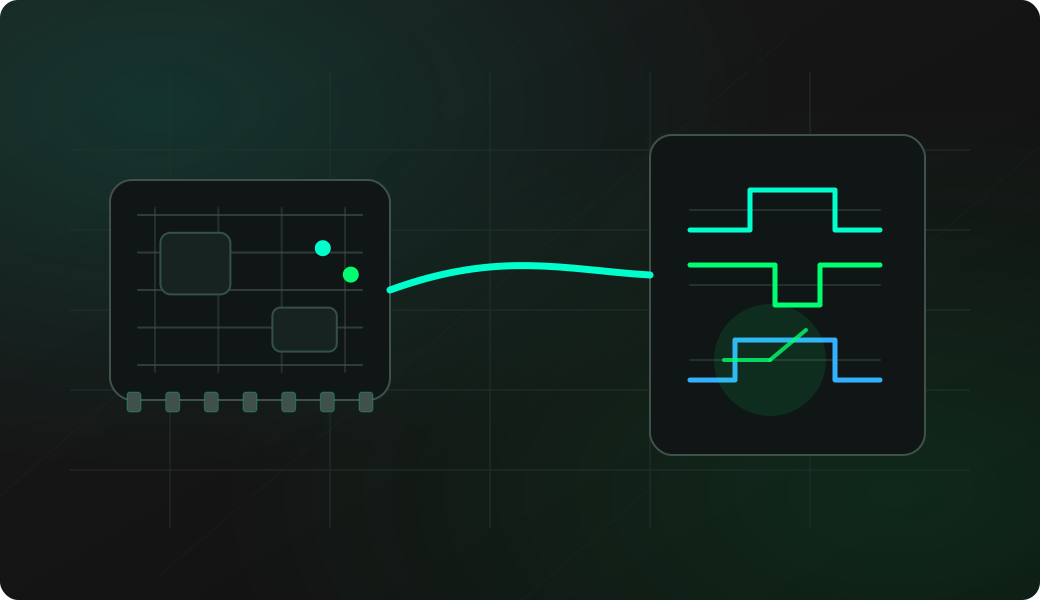
Check the target before connecting
- Identify the target signal voltage from its datasheet, labels or a multimeter.
- Confirm that the target’s logic level is safe for the ESP32 Bit Pirate GPIO you plan to use.
- Connect ground first, then connect only the signal you intend to observe or control.
Start with observation
When the wiring is safe, use a GPIO/DIO read, sniff or measurement workflow before driving the line. Observation makes it easier to catch a swapped pin, floating signal or unexpected activity without changing the target state.
Common mistakes
- Assuming every header pin uses the same logic voltage.
- Connecting a signal without a common ground.
- Driving a line before knowing whether the target already drives it.
- Using long, loose jumper wires on a fast or noisy signal.
Logic level safety FAQ
Why check voltage before connecting a signal?
ESP32 GPIO is not a universal logic-level input. A target that uses a higher voltage, negative signaling or an unknown driver can damage the board or the target if connected blindly.
What is the safest first connection to an unknown target?
Connect ground first, then observe one known-safe signal with the Bit Pirate input. Leave Bit Pirate outputs disconnected until you know the target voltage, direction and idle state.
Do pull-ups make an unsafe signal safe?
No. Pull-ups help define idle state on compatible open-drain or input lines, but they do not replace level shifting or voltage checks. Use proper level translation when the logic levels do not match.